CED Coating
1. Definition of CED Coating
Cathodic dip coating, or CED coating for short, is an industrial process in which a component is coated in a dip bath. This electrochemical process, also known by experts as cataphoresis, is ideally suited for coating complex shapes and large production runs. In automotive manufacturing, CED coating is standard practice for providing effective corrosion protection on car bodies and superstructures.
In practice, the terms cathodic dip coating (CED), anodic dip alloying (ATL), and electrophoretic deposition (EPD) are used interchangeably. In fact, all three processes are electrochemical coating methods in which a direct current flows between the workpiece and the counter electrode.
2. Basic Principle of Electrocoating
The dip tank contains a water-soluble binder that, due to the electrical circuit, adheres to the surface of the item being coated and forms a continuous coating film.
3. How the CED Coating Works
Coating is applied in immersion tanks equipped with anodes, in which the coating material is present in a water-diluted form. The workpieces to be coated are electrically connected to the negative terminal of a rectifier and immersed in the tanks. At a voltage of up to 400 volts, a layer of paint forms on the workpiece surface within a few minutes. Since the current adjusts to the painting system due to ohmic resistance, the desired paint film thickness can be controlled by adjusting the current. An acid forms at the anodes. To maintain a constant pH level in the immersion tank, this acid is drained from the tank via special cells. While in industrial CED coating, thinner layers of around 15–30 µm typically serve as a primer, layers ranging from 35 to 50 µm are known as KTL thick coatings, which are not subsequently overcoated.
During the process, circulation pumps keep the bath fluid constantly in motion. This circuit includes both filters and coolers. These remove the unwanted heat from the immersion fluid, which is released by the ohmic resistance in the tank. After coating, the components are rinsed with demineralized water. The excess coating flows back into the immersion tank along with the rinse water. During the coating process, the coating particles coagulate on the component surface to form a web-like film composed of countless tiny beads. In the final step of the process, the microscopic spheres are melted in an oven at 180–220°C. This causes them to cross-link into a hard, uniform layer.
4. Advantages of CED Coating
It is possible to apply a uniform coating with excellent adhesion to complex shapes (cavities, tubes, fine joints, sharp edges).
Above-average impact resistance and scratch resistance.
Excellent corrosion protection.
The coating acts as an electrical insulator.
The coating can be shaped during subsequent processing without any loss of quality.
Coarse threads remain common.
An effective coating method due to short immersion times of just a few seconds.
Suitable for large quantities.
Depending on the intended use, the uniform, visually flawless surface is also suitable for exposed parts.
5. Materials Suitable for Coating
In general, cathodic dip coating is suitable for a wide range of materials.
- Steel and thin-gauge steel sheets
- Components made of galvanized sheet metal
- Steel and gray cast iron
- Aluminum sheets and extruded aluminum profiles
- Aluminum and zinc die-cast alloys
- Hybrid construction (e.g., steel with riveted aluminum parts)
Depending on the material and paint substrate, special cleaning steps as well as either activation or passivation are required to prepare components for CED coatings. Due to the wide variety of materials and alloys, the necessity and type of pretreatment must be assessed on a case-by-case basis. Once the parameters are set, the components typically run through the processes in the systems as standard.
6. Typical Applications of CED Coating
In the automotive industry, as well as in commercial vehicle and agricultural machinery manufacturing, CED-coated parts meet the high requirements for corrosion protection, scratch and impact resistance, and solvent resistance. CED-treated components are also used in other sectors, such as mechanical and plant engineering, for coating pipes, in precision engineering, and in fitness, gardening, and household appliances, thanks to the fine, uniform finish of the coating. In addition, the CED coating often serves as an effective pretreatment or primer for other coating processes, such as powder coating or liquid painting.
7. Questions and Answers About CED Coating
FAQs on Electrocoating
Due to the low surface roughness of stainless steel parts, the CED coating adheres relatively poorly. For this reason, experts recommend pretreatment by blasting with iron-free materials and often exclude warranty claims from the outset.
Using appropriate covers or masking, holes or threads, for example, can be left uncoated. In addition, modern laser technology can be used to very gently remove the applied coating in specific areas, creating bare, electrically conductive spots.
Environmental protection begins with the CED-technology, specifically, with the careful selection of the equipment. Optimized pretreatment techniques and computer-aided controls guarantee effective environmental protection while ensuring optimal process quality. Consistent monitoring of the raw materials used, continuous monitoring of the dip bath, and state-of-the-art wastewater treatment ensure low consumption of fresh water and chemicals. Modern cathodic dip coating uses zinc- and lead-free coatings that can be applied without solvents. No harmful emissions are produced during the coating process, the drying process, or the subsequent use of KTL-coated parts, thus eliminating any risks to people and the environment.
It is not possible to give a flat-rate estimate for the cost of coating a single workpiece. The price is calculated based on the time and effort required for preparation, the component dimensions, and the lot size.
Yes. This process is one of the most efficient industrial coating methods for metallic surfaces, guaranteeing above-average impact and corrosion resistance.
Electrophoretic deposition, or EPD for short, is a two-step coating process in which electrically charged particles first move toward the oppositely charged electrode (the workpiece) and then, under the influence of heat, bond together to form a fine, homogeneous layer.
Are you looking for other editing options?
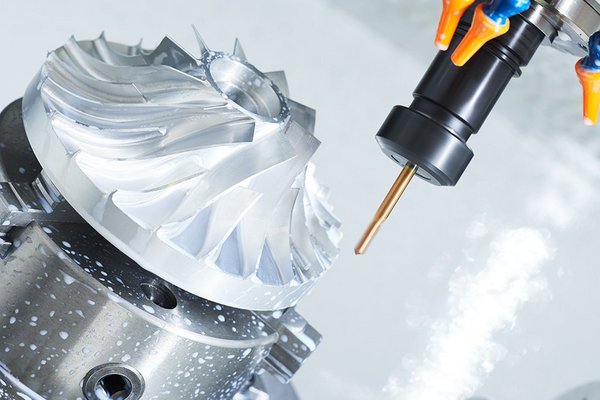
We deliver the metal components we manufacture for you as raw parts, or machined, finished, or assembled into subassemblies.
Processing / Assemblies
Extensive processing, surface treatment of metal parts ✓ pro-assembly and assembly of modules ✓ Tell us your requirements now!
Talk to us about your needs
Richter Formteile has many years of experience and in-depth expertise in the manufacture of precision metal parts using investment casting, MIM, sintering, or die-forging processes. Our customers value us as a reliable partner who provides guidance and support from the initial project inquiry through to delivery.
Additional technical terms in the glossary:
- Processing / Assemblies
- Brown part (MIM process)
- Steam autoclave (Precision Casting Process)
- DIN ISO
- Electropolishing
- Anodizing / Anodizing process
- Debinding (MIM progress)
- Feedstock (MIM process)
- Ceramic slurry (Precision Casting Process)
- Drop Forging
- Green body (MIM process)
- ISO 14001:2015
- ISO 9001:2015
- Notch Impact Strength
- CED Coating
- Alloys in Metallurgy
- Magnetic Particle Inspection / Fluxing
- Loss of material
- Metallic Materials
- Passivization
- Prototype
- Powder Coating
- Reproducibility
- Blank (workpiece)
- Beams
- Galvanizing: The Galvanizing Process
- Pre-financing
- Wax Tree (Investment Casting Process)
- Wax model (investment casting process)
- Wax injection mold (investment casting process)
- Tensile strength
- Tinder layer