Passivating
1. Definition of Passivation
In surface engineering, the term “passivation” refers to the formation of a protective layer on a metallic material. This protective layer can form spontaneously—as is the case with stainless steel or chrome, for example—or be deliberately created using surface engineering processes. The resulting protective layer is intended to prevent or significantly slow down corrosion of the base material.
Info: Corrosion Protection
Corrosion protection refers to measures designed to prevent damage to metal components caused by corrosion.
Whether and how quickly metals corrode depends on their material properties. A key factor is whether the metals themselves can form a spontaneous passivation layer and whether they can be coated with a protective layer through a passivation process.
2. Spontaneous Passivation
When bare metal comes into contact with air or another corrosive environment, corrosion may occur—depending on its properties. For example, the precious metals gold and platinum corrode only very slowly. Less noble metals such as zinc, iron, and aluminum corrode more quickly.
Whether and how quickly metals corrode depends on whether they have a passivation layer or are able to form one. Chromium, for example, has a thin, invisible oxide layer. An oxide layer forms when an alloy is heated in the air. It isolates the metal from the atmosphere. This means that no further corrosion is possible. Chromium is therefore often used to finish bathroom fixtures, allowing them to remain shiny for years.
In addition, stainless steel can form a passive layer on its own. The metal contains chromium. Chromium forms a chromium oxide layer when its mass fraction reaches 10.5 percent. This layer prevents oxidation, which causes corrosion. If the oxide layer is damaged, the bare metal comes into contact with the atmosphere. However, a new passivating layer then forms automatically.
In addition to chromium, aluminum, nickel, titanium, zinc, silicon, and lead can also form a passive layer. Ordinary steel cannot do this. This is because the corrosion layer—that is, rust—consists of a rapidly growing oxide layer. This layer cannot slow down corrosion.
3. Passivation Processes
If stainless steel has a chromium content of more than 12%, the existing natural passive layer can be further improved. This can be achieved using nitric acid or citric acid. These acids reduce the free iron particles on the surface. The remaining chromium then forms a passive layer through oxidation.
Citric acid is recommended for passivation. It is safer and more effective to use. Nitric acid has the disadvantage that it reduces not only the iron content but also the content of other alloying elements. As a result, the chromium oxide layer can only be formed to a limited extent.
Although some metals naturally form a passive layer on their own, it can still be worthwhile to produce the passive layer using a technical process. This is particularly the case with aluminum, magnesium, cadmium, zinc, and silver. In the case of aluminum, the process is not referred to as passivation but rather as anodizing.
For magnesium, cadmium, zinc, and silver, passivation serves not only to provide better corrosion protection but also lays the groundwork for subsequent process steps. Additionally, passivation provides tarnish protection for silver as well as protection against fingerprints.
The chromating of zinc coatings is technically important. It creates a passivation layer that can significantly delay the corrosion of zinc. The layer can be blue, black, olive, yellow, or transparent. The color depends on the process used. Some of these processes produce a passivation layer that contains toxic chromium(VI) oxide. This type of passivation is banned in the EU for use in automotive manufacturing (passenger cars < 3.5 t) and in household appliances.
An alternative to passivation layers containing toxic chromium(VI) oxide is chromium(VI)-free passivation. However, in some cases, this cannot slow corrosion as effectively. Another alternative is modern passivation processes that use chromium(III) or are chromium-free. In chromium-free passivation, the coating consists of titanium or zirconium oxide. Thick-film passivation of zinc coatings, for example, is chromium(IV)-free and offers good to very good protection against corrosion.
4. Questions and Answers About Passivation
FAQs About the Protective Coating
Stainless steel is particularly resistant to corrosion because it has a microscopically thin passive layer rich in chromium oxide. This layer forms when chromium and nickel on the surface oxidize and iron is simultaneously removed. When stainless steel is passivated, it becomes even more resistant to corrosion.
The purpose of pickling stainless steel is to remove impurities and form a uniform passive layer. This makes the stainless steel more corrosion-resistant. Pickling is a chemical process. In technical contexts, pickling refers to the treatment of solid objects. The goal of pickling is to alter a surface in order to protect it, for example, against oxidation (in the case of metal) or against mold (in the case of wood and fabrics). Pickling is also used to dye a surface.
Aluminum oxidizes quickly in dry air. It forms a dense oxide layer. Over the course of a few days, the layer grows to twice or three times its original thickness.
Are you looking for other editing options?
We deliver the metal components we manufacture for you as raw parts, or machined, finished, or assembled into subassemblies.
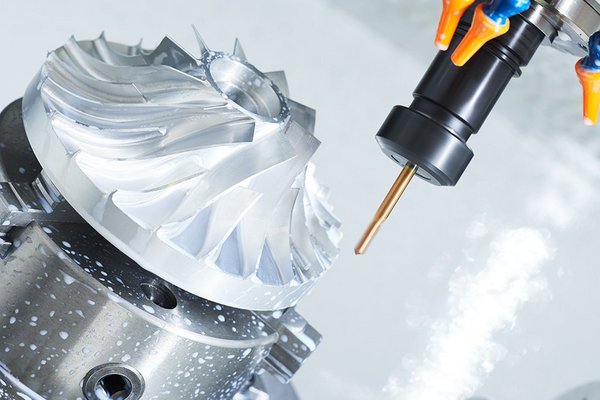
Processing / Assemblies
Extensive processing, surface treatment of metal parts ✓ pro-assembly and assembly of modules ✓ Tell us your requirements now!
Talk to us about your needs
Richter Formteile has many years of experience and in-depth expertise in the manufacture of precision metal parts using investment casting, MIM, sintering, or drop forging processes. Our customers value us as a reliable partner who provides guidance and support from the initial project inquiry through to delivery.
Additional technical terms in the glossary:
- Processing / Assemblies
- Brown part (MIM process)
- Steam autoclave (Precision Casting Process)
- DIN ISO
- Electropolishing
- Anodizing / Anodizing process
- Debinding (MIM progress)
- Feedstock (MIM process)
- Ceramic slurry (Precision Casting Process)
- Drop Forging
- Green body (MIM process)
- ISO 14001:2015
- ISO 9001:2015
- Notch Impact Strength
- CED Coating
- Alloys in Metallurgy
- Magnetic Particle Inspection / Fluxing
- Loss of material
- Metallic Materials
- Passivization
- Prototype
- Powder Coating
- Reproducibility
- Blank (workpiece)
- Beams
- Galvanizing: The Galvanizing Process
- Pre-financing
- Wax Tree (Investment Casting Process)
- Wax model (investment casting process)
- Wax injection mold (investment casting process)
- Tensile strength
- Tinder layer