Powder Coating
Table of Contents
1. Definition: What is powder coating?
Powder coating is a modern coating process in which an electrostatically charged coating powder is applied to the treated surface of a conductive material and cured under heat to form a uniform layer of color. For this reason, the process is often referred to in practice as powder coating. Since the coating powders are based on various substrates such as epoxy resin, polyester resin, or polyamide, there is a suitable coating for nearly every application as well as for every individual requirement regarding layer composition, layer thickness, texture, and gloss. Powder-coated surfaces are durable, scratch-resistant, impact-resistant, and resistant to corrosion and weathering.
2. Technology and Process Flow: How Does Powder Coating Work?
Powder coating is divided into three main subprocesses, which are inextricably linked in industrial applications by an automated conveyor system. This means that the workpieces to be coated remain on specially designed workpiece carriers throughout the entire process.
-
1. Pretreatment
The goal of pretreatment is to create an optimal surface for paint application. To achieve this, the components must be carefully cleaned of rust, scale, grease, stickers, foreign coatings, dirt, and dust. Depending on the number, geometry, and material properties of the components, this can be done mechanically or chemically. For aluminum workpieces, it is also necessary to remove the natural oxide layer. This is followed by a process known as conversion coating. This involves creating a solid bonding base through a chemical reaction between the metal and an acid, or through phosphating, anodizing, or chromate conversion coating. Additionally, this pretreatment step improves subsequent corrosion protection. The pretreatment process concludes with the drying of the workpieces or components.
-
2. Application of the powder coating
The powder is applied either manually or mechanically using special powder spray guns. These are designed to create an electrostatically charged cloud of powder from the coating powder. The workpieces are suspended individually on the workpiece carrier. The carrier is grounded so that the coating particles adhere to it and form a dense layer of powder on the workpiece surface.
-
3. Cross-linking and Drying
After spraying, the workpiece carriers are fed into an oven where temperatures range from 120 to 250 °C. The exact operating temperature and dwell time in the oven depend on the composition of the powder coating and the thickness of the workpiece. Depending on the coating composition and the required properties of the final surface, powder coating can achieve layer thicknesses between 60 and 130 micrometers.
In all powder coating systems, the excess powder that has not “adhered” to the workpieces is collected, recycled, and reused.
3. What are the advantages and disadvantages of powder coating compared to liquid painting?
Advantages of Powder Coating
Compared to wet painting, powder coating on a state-of-the-art coating system is not only more cost-effective and faster, but also more environmentally friendly due to the powder composition, the process flow, and the reuse of “off-target” powder. In addition, powder coating has a very wide range of applications. Here are the key advantages at a glance:
- No solvents, toxic additives, or heavy metals
- A surface coating that is safe for human health
- No special requirements for the design of the components to be coated; only a hole for hanging needs to be provided
- No restrictions regarding part size
- No risk of “paint drips” or runs
- High chemical and mechanical resistance
- Excellent weather resistance
- Very good dynamic properties
- Thick coatings conceal irregularities and enable homogeneous, visually appealing surfaces
- Cost-effective, excellent value for money
Disadvantages of Powder Coating
The quality of the powder coating is largely determined by proper pretreatment. This process is relatively time-consuming and labor-intensive. Other disadvantages may include:
- Currently, only electrically conductive and heat-resistant materials can be powder-coated.
- Thorough cleaning of the spray booth is required before changing colors.
- Coating sharp-edged components and workpieces with small cavities or recesses is difficult. Due to highly fluctuating field line patterns, undesirable variations in coating thickness occur (e.g., overcoating at the edges while the coating is insufficient in the inner corners).
4. Other Types of Proceedings
In addition to the electrostatic powder coating (EPS) described above, there are several powder sintering processes for the internal and/or external coating of small parts, containers, and pipes. These include, for example, the Sintraflux process, vortex sintering, and bulk sintering. In all sintering processes, the workpieces to be coated are heated using trickle and bulk feeding devices or vibrating boxes before the color powder is applied. Upon contact with the hot workpiece surface, the powder melts and forms a homogeneous layer.
5. Applications of Powder Coating
In addition to protecting surfaces and enhancing their appearance, powder coating also affects the technical and functional properties of workpieces and components. As a result, the process is suitable, for example, for creating antistatic, saltwater-resistant, graffiti-resistant, or antimicrobial surfaces.
Common applications, including typical examples:
- Construction: windows, doors, roller shutters, columns, facades, railings, fences
- Furniture and household appliances: Radiators, refrigerator and washing machine panels, metal housings for kitchen appliances, furniture and furniture frames for patios and gardens
- Automotive and bicycle manufacturing: Rims, smaller components, and chassis parts that require special protection against rust; bicycle frames and attachments
- Construction equipment, agricultural machinery, and commercial vehicles: metal components, housings, and panels that are subject to wear caused by mechanical stress, weather, construction materials, and chemicals.
Which materials are suitable for powder coating?
Electrostatic powder coating is based on the principle that particles with opposite electrical charges attract each other. Heat also plays a role. Therefore, the process is suitable for stable, temperature-resistant, electrically conductive objects. Virtually all metals can be powder-coated, most notably:
- Steel
- Stainless steel
- hot-dip galvanized steel
- Aluminum
Engineers and scientists are currently working on developing a reliable and reproducible method for applying powder coatings to temperature-sensitive, non-conductive materials such as plastics or wood.
6. Questions and Answers About Powder Coating
More questions about powder-coated surfaces
The common belief that powder-coated parts look worse than those with liquid paint is a misconception. Modern powder coatings offer a vast selection of colors, matte and glossy finishes, and the ability to create metallic effects. Standard colors from the Classic color chart are available, as are RAL design colors, custom colors, neon colors, and colors from the NCS color system. The most common colors for industrial applications are black, white, and anthracite, as well as red, yellow, and silver.
Standard powder coatings are cross-linked (colloquially known as “baked”) at temperatures between 160 and 190 °C and have a heat resistance of up to 130 °C. However, there are also special silicone-based powder coatings that cure at significantly higher temperatures. These surfaces can withstand temperatures of 500 °C and higher.
When used as intended, a powder-coated surface will last a very long time without any loss of quality. Depending on the specifications and design, it features brilliant color, is extremely impact-resistant and weather-resistant, and is still easy to maintain. Its robustness and long service life are also reflected in the manufacturers’ warranty promises. Operators of modern powder coating facilities offer an average warranty of 5 years for general indoor and outdoor applications and up to 10 years for special applications.
Are you looking for other editing options?
We deliver the metal components we manufacture for you as raw parts, or machined, finished, or assembled into subassemblies.
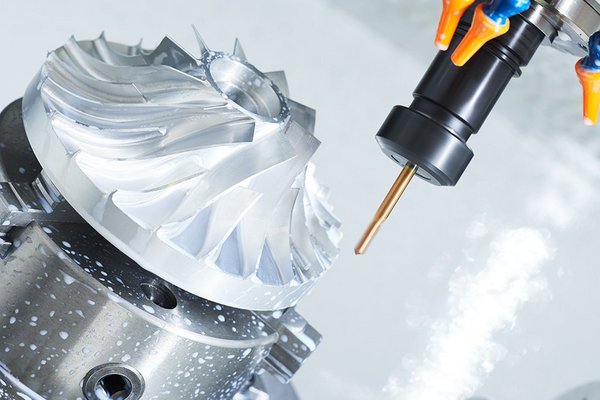
Processing / Assemblies
Extensive processing, surface treatment of metal parts ✓ pro-assembly and assembly of modules ✓ Tell us your requirements now!
Talk to us about your needs
Richter Formteile has many years of experience and in-depth expertise in the manufacture of precision metal parts using investment casting, MIM, sintering, or die-forging processes. Our customers value us as a reliable partner who provides guidance and support from the initial project inquiry through to delivery.
Additional technical terms in the glossary:
- Processing / Assemblies
- Brown part (MIM process)
- Steam autoclave (Precision Casting Process)
- DIN ISO
- Electropolishing
- Anodizing / Anodizing process
- Debinding (MIM progress)
- Feedstock (MIM process)
- Ceramic slurry (Precision Casting Process)
- Drop Forging
- Green body (MIM process)
- ISO 14001:2015
- ISO 9001:2015
- Notch Impact Strength
- CED Coating
- Alloys in Metallurgy
- Magnetic Particle Inspection / Fluxing
- Loss of material
- Metallic Materials
- Passivization
- Prototype
- Powder Coating
- Reproducibility
- Blank (workpiece)
- Beams
- Galvanizing: The Galvanizing Process
- Pre-financing
- Wax Tree (Investment Casting Process)
- Wax model (investment casting process)
- Wax injection mold (investment casting process)
- Tensile strength
- Tinder layer