Investment Casting for Custom Precision Parts
Investment casting is suitable for precision parts with intricate contours, internal geometries, and a wide range of castable metal alloys. Richter Formteile works with you to determine the most appropriate part shape, alloy, and design based on your requirements, and supports your project through to the agreed-upon delivery condition.
What is investment casting?
Investment casting is a precision casting process. It is also known as the lost-wax process because a wax model is melted away during the mold-making process. First, a wax model of the final precision part is created in a mold. Several wax models are assembled into a cluster of wax, also known as a model cluster. Through repeated dipping, sanding, and drying, a ceramic shell is built up layer by layer around it. After the wax is melted out, the mold cavity remains. This is filled with molten metal. Once the metal has solidified, the ceramic shell is removed, and the precision parts are separated from the casting system. Richter Formteile evaluates which component shape, alloy, and design can be technically and economically feasible using investment casting, based on your drawing, functional dimensions, quantity, testing requirements, and desired delivery condition. Based on this, we advise you on a design suitable for investment casting, select an appropriate production partner, and coordinate the implementation with them.
On this page
When is investment casting the right choice for a component?
Whether investment casting is technically and economically feasible for a component depends primarily on its geometry, material, tolerances, quantity, and desired delivery condition. We will review these factors together and, based on your drawings and requirements, determine whether investment casting is the appropriate manufacturing method for your precision part.
Delicate contours and internal geometries
Investment casting is an option when delicate contours, openwork, or internal geometries are to be created in a cast part. The key factor is whether the part’s shape can be reliably produced and inspected using a mold, a wax model, possible ceramic cores, and a suitable casting system.
One-Piece Molded Parts
The process can reproduce complex component shapes in a single casting. This makes it possible to reduce the number of potential joining steps or machined individual parts. Whether this is possible in a specific project depends on the component shape and requirements.
Wide selection of materials
Numerous castable steel, stainless steel, and other metal alloys are available for investment casting. The appropriate material depends on the load, temperature, corrosion requirements, heat treatment, and delivery condition.
Good surface finishes and minimal additional machining
The ceramic mold can reproduce fine contours and surfaces. As a result, the precision part is already largely formed in its final shape. However, functional surfaces with particularly tight tolerances may still require additional machining.
Component size and projected demand
A mold is generally required for wax models. The component size, mold costs, mold design, and projected demand must therefore be considered together. For individual parts and very small quantities, another process may be more cost-effective.
Functional Tolerances
Not every dimension requires the same level of accuracy. Defining functional dimensions early on helps ensure that the tooling, casting process, inspection, and any necessary post-processing are designed with specific objectives in mind.
Selection of a Procedure Without a Predefined Choice
Investment casting is not necessarily the best solution. Depending on the part size, material, load, and production volume, MIM, sintering, die forging, or machining may be more suitable.

Is investment casting right for your component?
Please send us your drawing and any project details you already have. Information regarding materials, planned requirements, functional dimensions, operating conditions, testing requirements, and delivery condition will help us with the initial technical assessment.
Comparing Investment Casting with Other Methods
How does the investment casting process work?
From tooling to final inspection, every step must be tailored to the material and geometry of your component. Richter Formteile works with you to define the technical requirements, selects a suitable production partner, and coordinates tooling, manufacturing, and the agreed-upon inspections. This way, your drawing serves as the foundation for the entire investment casting process.

1. Manufacturing the wax injection mold
A mold or tool is required to reproduce the contours of the investment-cast component. This tool is a negative image of the component and is usually made of aluminum or steel.
The mold itself must be precision-machined to ensure compliance with tolerances and surface finish requirements.

2. Making the wax model
The investment casting component is cast in mold wax. To do this, liquid wax is injected into the mold. The resulting wax model corresponds exactly to the final cast part.
The machine’s injection pressure and the temperature of the molding wax must be precisely adjusted to ensure high dimensional accuracy and surface quality.

3. Wax Model Assembly
The wax models are joined together using a wax tree, also known as a wax cluster. This creates the gating system, which includes the feed channels to the casting mold.
Experienced and trained investment casting experts carefully and precisely assemble the wax trees to ensure high-quality castings.

4. Soaking, Sanding, and Drying
The wax cluster is repeatedly dipped into ceramic slurry and coated with refractory material. Each layer must be allowed to dry thoroughly before the next coat is applied. This creates a ceramic shell whose inner surface replicates the contours of the wax models.

5. Melting
The wax is melted out of the ceramic shell. What remains are the cavities for the castings and the gating system. The wax models are lost in the process; new models are needed for each subsequent casting.

6. Burning
The ceramic shell is fired. This removes any remaining wax and gives the mold the strength required for casting. The subsequent temperature control is tailored to the alloy used and the casting process.

7. Precision Casting
The alloy that Richter Formteile has specified with you for the component is melted at the production partner’s facility and poured into the prepared ceramic mold. Temperature control, mold filling, and solidification must be tailored to the material and the component’s geometry. These factors influence the quality of the casting.

8. Removing from the mold
Once the metal has solidified and cooled, the ceramic shell is removed. This process destroys the shell, so it cannot be reused. The castings now form a cluster of metal parts and are still attached to the gating system.

9. Disconnect
The individual castings are separated from the metal casting system. The remaining sprue residues are machined during subsequent processing. The surfaces that require additional machining are determined by your drawing and the agreed-upon delivery condition.

10. Radiation
During blasting, any remaining ceramic residue is removed from the surfaces of the castings. Richter Formteile coordinates the additional machining steps agreed upon, such as heat treatment, CNC machining, surface treatment, or assembly. The key factor is the condition in which you need the component for use.

11. Final Inspection
Richter Formteile will coordinate with you to determine which characteristics will be inspected and documented. In addition to visual inspection, the agreed-upon dimensional, material, and other quality requirements are verified. During the sampling process, you will receive the results in the initial sample inspection report. We will resolve any deviations with the production partner; series production will begin after your approval.
The Investment Casting Process in a Video
Designing for Investment Casting
A durable precision investment-cast part begins with a design that takes into account component function, castability, solidification, shrinkage, tolerances, and potential post-processing. That is why we clarify critical geometries and functional dimensions with you and our production partner before tooling is fabricated.
Wall Thicknesses and Transitions
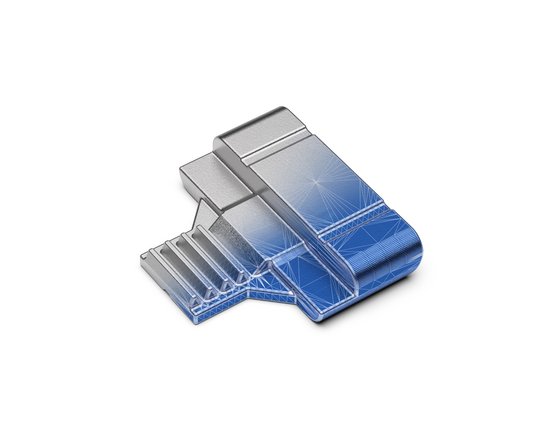
Wall thicknesses that are as uniform as possible promote controlled filling and solidification. Large material accumulations or abrupt transitions can increase the risk of voids and warpage. Radii and appropriate transitions help improve material flow.
Internal Contours and Ceramic Cores
Depending on the component, complex internal geometries can be reproduced using ceramic cores. Their manufacturability, stability, and subsequent removal must be taken into account as early as the design phase.
Sprues, feeders, and parting lines
The position of gates and feeders affects mold filling, solidification, and post-processing. Functional surfaces and visible areas should therefore be identified early on.
Shrinkage and Potential Warping
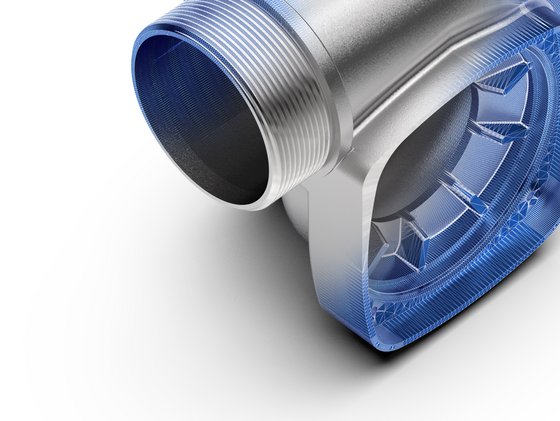
Wax, ceramic, and metal change their dimensions during the process. The necessary allowance cannot be derived from a single general value. Material, geometry, process, and component size must be considered together.
Prioritize functional dimensions
Tight tolerances should be specified where they are necessary for function or assembly. This allows the tool, process, inspection, and, if necessary, machining to be specifically designed for the component’s intended use.
Key Terms in Investment Casting
You Should Know These Terms
A model made of wax that will later become a cast part. It is melted away during the process and is therefore called a "lost model."
Arrangement of several wax models with the future sprues and feed channels. The ceramic shell is built up around the wax cluster.
A model that is destroyed during the manufacturing of the mold and cannot be reused.
A multilayered, refractory mold surrounding the wax core. After the wax has melted away, it forms the mold cavity for the molten metal.
Another term for investment casting. The name refers to the process of melting out the wax model from the ceramic mold.
Sprues, runner paths, and feeders through which the molten metal enters the mold and supplies the casting during solidification. Before casting, this system is part of the sprue cluster. After casting, it consists of metal and is separated from the castings.
A ceramic mold insert used to create specific internal contours and cavities in a cast part.
The tool, wax model, ceramic mold, and metal all affect the final dimensions of the component. These dimensional variations are taken into account during tool and process design.
Post-casting processes, such as cutting, grinding, heat treatment, machining, surface treatment, or assembly.
Molding slurry refers to a mixture of finely ground refractory materials and binders that is used as a dipping compound for forming ceramic shells around wax trees.
The wax tree refers to the result of assembling the wax models using the investment casting process. Once the wax models and the core have been precisely joined together, the wax tree is formed. It is then used for further processing.
A steam autoclave is a cylindrical pressure vessel used in the investment casting process for heat treatment. Similar to a pressure cooker, it is used to melt the wax under pressure.
Advantages and Limitations of Investment Casting
Investment casting combines delicate contours and complex component shapes with a wide range of castable metal alloys. The ceramic mold can reproduce surfaces and details in such a way that additional machining steps can be reduced. At the same time, the process places specific demands on the wax pattern, casting system, process control, and production volume.
Delicate contours, cutouts, and internal geometries
Tooling and start-up costs must be appropriate for the project
Wide selection of castable metal alloys
The material and process window must be coordinated with each other
High-quality surfaces and a precision part that is already taking shape in its final form
Functional surfaces may still require post-processing
Complex component shapes can be produced in a single casting
The casting system, shrinkage, and potential warping must be taken into account
Potential to reduce machining and joining steps
Achievable tolerances depend on dimensions, geometry, material, and delivery condition

When investment casting isn't the best solution
Depending on the size, geometry, load, material, quantity, and desired delivery condition, MIM, sintering, die forging, or machining may be the best fit. If multiple processes are viable options, we’ll compare the possibilities and advise you on your selection.
MIM
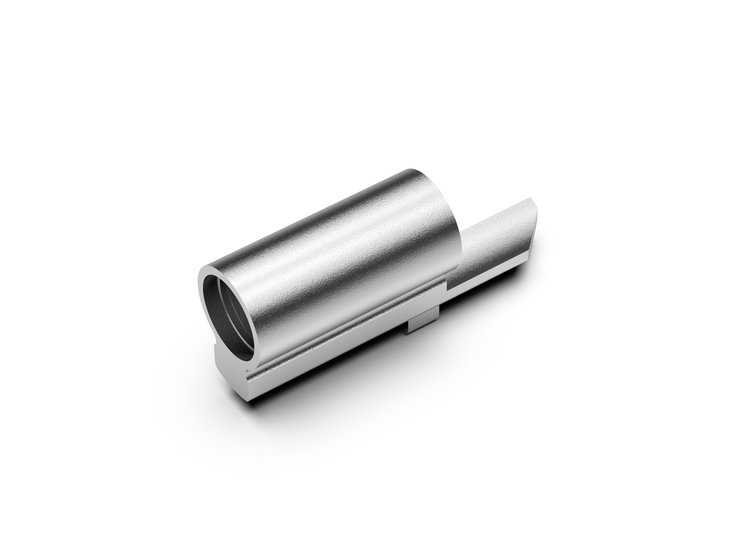
Metal injection molding for small, highly detailed precision parts in series production—with threads, engravings, and fine contours already incorporated into the mold.
View MIM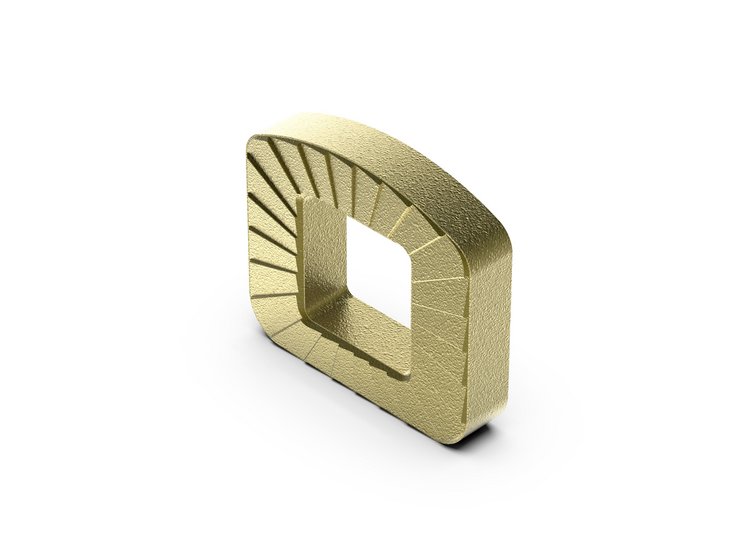
Sintering
Pressing and sintering for mass-produced components—with many contours already formed in the die, eliminating the need for time-consuming milling or turning.
View Sintering
Die forging
Forged components for high loads—with materials and designs tailored to the forces your component must withstand during operation.
View Die ForgingInvestment Casting Materials at Richter Formteile
The material determines which mechanical, thermal, and corrosive stresses a precision investment-cast part can withstand. It is not merely a matter of whether an alloy is castable in principle; it must also be suitable for the component geometry, manufacturing process, heat treatment, testing, and desired delivery condition. Richter Formteile offers precision investment-cast parts made of steel, stainless steel, and aluminum alloys. We determine which specific alloys are currently available and suitable for a given precision part based on the component’s function, operating conditions, and desired delivery condition.
In which industries is investment casting used?
Investment casting is used in various industries when precision parts need to combine intricate contours, internal geometries, or specific requirements for materials and surfaces.
Mechanical Engineering
Complex functional parts, levers, housings, and components with defined functional surfaces
Vehicle Manufacturing
High-performance components with complex geometries and reproducible mass-production characteristics
Drive Technology
Geometrically complex components for power transmission and motion functions
Fittings and Pumps
Components in contact with media or subject to pressure, selected based on material and testing requirements
Electrical Industry
Metallic functional and housing components with complex contours
Medical Technology
Small and complex components with high requirements for materials, surface finishes, and testing
Technical Investment Casting Specifications at Richter Formteile
The achievable values depend on the component size, geometry, material, process, and agreed-upon delivery condition.
standard weight:
0.05 - 150 kg
production:
Europe, Asia
certified acc. to:
DIN ISO 9001, 14001, IATF 16949
tolerances:
according to VDG leaflet P 690 D1 (approx. +/- 0.7% of the nominal size)
surfaces:
Ra 6.3
materials:
steel alloys, stainless steel alloys and aluminum
Post-processing:
own CNC processing centers, heat treatments according to customer specifications
approvals in the fittings area:
AD 2000 and TRD 100
Inspections and Follow-up Procedures for the Agreed Delivery Condition
Not every component requires the same tests and follow-up processes. We coordinate the necessary scope with you and the production partner based on function, material, drawings, and documentation requirements.
Possible Exams
- Dimensional Inspection and 3D Measurement
- Chemical Analysis
- X-ray and ultrasonic testing
- Mechanical Material Testing
- Additional agreed-upon testing and documentation steps
Possible follow-up proceedings
- CNC Machining
- Heat Treatment
- Blasting, vibratory finishing, and polishing
- Coating and Other Surface Treatments
- Assembly and packaging according to the agreed specifications
The steps that are required and available are determined on a project-by-project basis. This also applies to the scope of testing, sampling, documentation, and acceptance.
Your Investment Casting Project with Richter Formteile
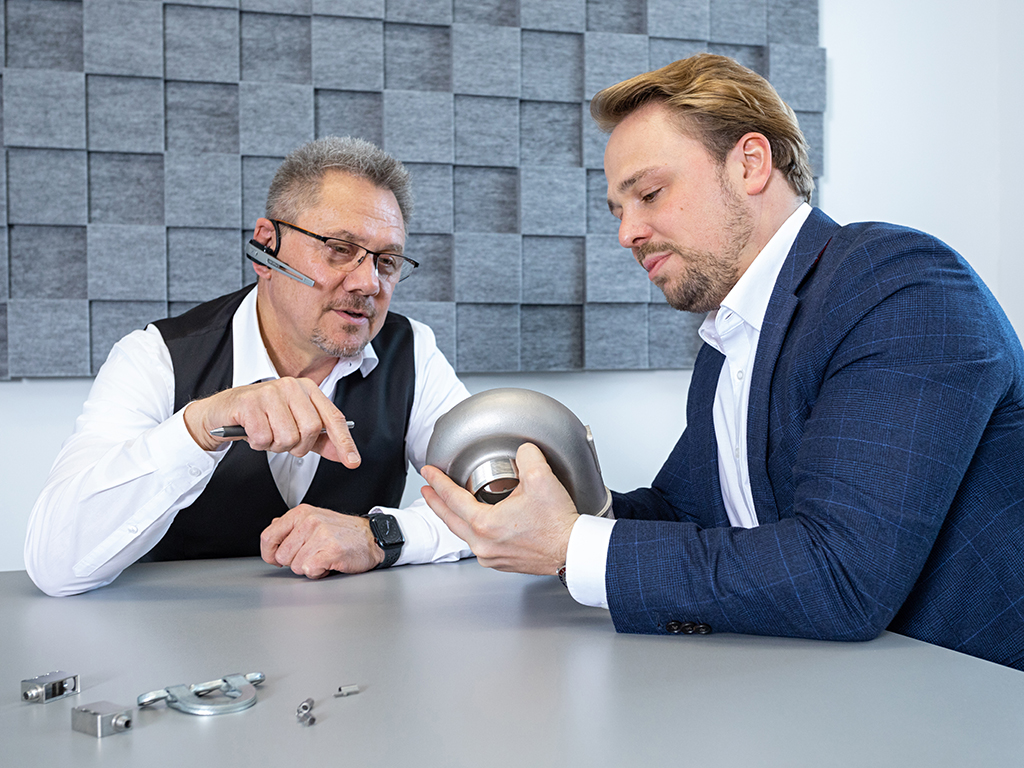
You provide us with your drawing and tell us what the precision part needs to be capable of. We evaluate the technical feasibility and advise you on materials, designs suitable for investment casting, and appropriate tolerances. We then select a suitable production partner from our international network.
Richter Formteile coordinates tooling, prototyping, and agreed-upon inspections. If necessary, we coordinate CNC machining, heat treatment, surface treatment, assembly, or other downstream processes.
Full Service for Your Precision Investment-Cast Part
In addition to technical project support, Richter Formteile offers further advantages that ensure reliable project execution and supply:
- Contract Partner in Germany
: Richter Formteile coordinates the production partners involved and remains your designated point of contact. - On-site
quality inspection: The agreed-upon processes and quality characteristics are inspected directly at the production partners’ facilities. - Pre-financing and warehousing
Richter Formteile pre-finances and produces the agreed-upon quantities within the agreed-upon framework and stores them in Leonberg. - Just-in-time delivery upon request
The agreed-upon batch sizes are delivered from the warehouse in Leonberg as needed.
Let's talk about your investment-cast part
Frequently Asked Questions
About Investment Casting and Investment Casting Projects
Investment casting is a precision casting process that uses lost-wax models and ceramic molds. A ceramic shell is built up layer by layer around a wax core. After the wax is melted out, the resulting mold cavity is filled with metal.
Investment casting is particularly well-suited for precision parts with intricate contours, internal geometries, and a wide range of castable alloys. Its specific suitability also depends on part size, quantity, tolerances, inspection, and delivery condition.
Achievable tolerances depend on the part size, geometry, material, and process. Functional dimensions should be prioritized early on. Particularly tight tolerances may require additional machining.
The ceramic mold enables good surface quality in investment casting. The specific value depends on the material, process, component condition, and any surface treatment.
Richter Formteile offers precision investment-cast parts made of steel, stainless steel, and aluminum alloys. We evaluate the availability of a specific alloy and its suitability based on the component requirements.
Post-processing may be necessary if functional surfaces, tolerances, material properties, surface finish, or assembly condition cannot be achieved solely through the casting process. The scope of work required is determined on a project-by-project basis.
It is helpful to provide a drawing or 3D data, as well as information on the material, planned requirements, functional dimensions, operating conditions, testing requirements, and delivery condition. Any missing information can be clarified during the initial consultation.
Throughout the project, Richter Formteile will remain your point of contact for technical coordination, quality, and delivery, and will coordinate the agreed-upon steps with the production partner.
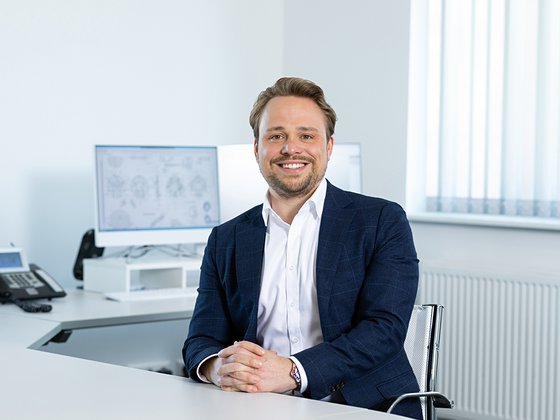
Your Contact for Precision Casting
Would you like to discuss a geometry, a material, or the appropriate manufacturing process? Your contact person will work with you to determine what information is needed for an initial technical assessment.
Timo Richter
Management Director
+49 7152 90171-0
t.richter@richterformteile.com
Let's talk about your investment-cast part
Please send us your drawing or the project details you already have. If any information is missing, we will work with you to determine what else is needed for the technical review.