Galvanizing: The Galvanizing Process
Table of Contents
1. Definition: What is galvanizing?
Galvanizing is a coating process in which semi-finished products, components, or assemblies made of iron or steel are coated with a thin layer of pure zinc. This can be accomplished using various methods. Compared to other types of coatings, galvanizing provides active corrosion protection in addition to passive protection. This means that the zinc layer has a cathodic effect relative to the iron and acts as a sacrificial anode. This significantly increases the service life of the coated parts.
2. Different Types of Galvanizing: What Methods Are Available?
There are a number of different methods for applying a zinc coating to a component. The most commonly used methods in practice are:
- Hot-dip galvanizing (melt-dip galvanizing)
- Electrolytic galvanizing
- mechanical galvanizing
- Spray zinc coating
- Sherardizing (diffusion galvanizing)
Due to the sometimes considerable differences between these processes, the term “galvanizing” is only meaningful with certain limitations. According to technical terminology, the common element of all zinc plating processes is the creation of a corrosion-resistant coating made of pure zinc. Coating methods that use zinc dust paints or zinc flake coatings, therefore, are not considered zinc plating.
Do you have questions about the galvanizing process?
Talk to us directly
Would you like to learn more about Richter molded parts, or do you already have a specific inquiry? Get to know our representatives or send us your drawings and project details directly.
3. Hot-dip galvanizing
3.1 What is hot-dip galvanizing, and how does it work?
In hot-dip galvanizing, the zinc coating is applied by immersing the pretreated workpiece or component in a molten zinc bath. The temperature of the zinc bath is approximately 450 °C. In addition, technicians distinguish between batch galvanizing and continuous hot-dip galvanizing, often referred to as Sendzimir galvanizing, continuous galvanizing, or strip galvanizing.
A typical application for batch galvanizing is the coating of a custom-made stair railing to provide lasting protection against rust. Semi-finished products such as sheet metal, strips, or profiles are usually galvanized continuously. Different zinc coating thicknesses are achieved in both processes. While the zinc coating in batch galvanizing ranges from 50 to 150 micrometers, continuous hot-dip galvanizing typically yields coating thicknesses of up to 40 micrometers.
3.2 Features of piece and continuous galvanizing at a glance:
Piece-by-piece galvanizing
- Ideal for individual, custom-made components and structures
- Complete immersion of the pretreated workpiece into the molten zinc bath
- High coating thicknesses can be achieved
- Robust, long-lasting corrosion protection
- Components are reliably protected against corrosion all around—inside and out, including at the cut edges
Continuous galvanizing (strip galvanizing)
- Intermediate products such as steel strips or profiles pass continuously through a zinc bath prior to further processing.
- Thinner zinc coating than with piece galvanizing
- Subsequent punching, cutting, etc., destroys the zinc coating at the cut edges
3.3 What are the advantages and disadvantages of hot-dip galvanizing?
Advantages of Hot-Dip Galvanizing
In addition to providing robust, long-term corrosion protection, the process offers a number of other advantages:
- an environmentally friendly process that is highly cost-effective.
- High resistance to impact, shock, and scratches.
- All-around cathodic corrosion protection, even on edges, in hard-to-reach areas, and inside cavities
- Maintenance-free
- Aesthetically pleasing appearance
Disadvantages of Hot-Dip Galvanizing
- Risk of component warping due to high zinc bath temperature
- Surface is slightly rough; decorative surface finishes are not possible
- Rework of threads, drip noses, and sharp drip edges may be required
- Limitations due to the size of the component design or, in the case of perforated sheets, due to the hole size
3.4 What standards apply to hot-dip galvanizing?
The most important set of standards for piece-by-piece hot-dip galvanizing is DIN EN ISO 1461. This standard is valid throughout Europe. As an ISO standard, it is also recognized worldwide. The standard specifies all requirements for the hot-dip galvanizing of individual parts as well as the corresponding testing procedures. However, DIN EN ISO 1461 defines only the services that the galvanizing contractor must provide. The hot-dip galvanizing plant is not responsible for defects that arise during subsequent transport or during the assembly of the galvanized parts. For continuous strip galvanizing, DIN EN 10346 and DIN EN 10143 apply. These standards specify all requirements and test procedures regarding the quality and thickness of the zinc coating. The proper repair of defects is also explained in detail. The galvanizing of barbed wire is governed by its own standard, DIN EN ISO 10244-1 and -2.
4. Electrogalvanizing
In electroplating, zinc plating is a process used both to protect against corrosion and to finish the surfaces of a wide variety of steel parts. Because it is relatively cost-effective, electrogalvanizing is used very frequently in the automotive industry, for example. In the galvanizing process, the zinc coating is formed using an electric current. To do this, the components to be galvanized are immersed in an acidic or alkaline electrolyte bath, where they act as the cathode. The electrode acting as the anode consists of pure zinc. During the galvanizing process, the steel does not form an alloy with the zinc. A relatively thin layer of zinc forms, which provides excellent protection against corrosion for the galvanized parts.
4.1 What are the advantages and disadvantages of electrogalvanizing?
Advantages of Electrogalvanizing
- High contour accuracy
- No dripping
- Threads remain functional; fits remain guaranteed
- No component warping due to low galvanizing temperatures (max. 70 °C)
- Cost-effective corrosion protection and coating process
- Modern appearance
Disadvantages of Electrogalvanizing
- The zinc coating is significantly thinner (coating thickness approximately 5 to 7 micrometers) than with hot-dip galvanizing
- The corrosion protection is less durable than with other types of zinc coating
- For hardened parts, there is a risk of hydrogen embrittlement
5. Mechanical Galvanizing
In mechanical zinc plating—often referred to by experts as “mechanical plating”—the zinc coating that protects against corrosion is applied without the use of heat or electrolytes. This makes this type of zinc plating ideal for parts prone to warping as well as for hardened parts such as screws, nuts, or small parts made of spring steel. The zinc plating process takes place fully automatically in a rotating drum filled with a chemical substance, glass powder, and zinc powder. While the glass beads essentially “hammer” the zinc powder onto the component, a controlled chemical reaction ensures that a strong bond forms between the steel and the zinc. Mechanical zinc coating produces very uniform zinc surfaces. However, the decorative appearance and adhesion are significantly inferior to those achieved with electrogalvanizing, so mechanical zinc coating is used relatively rarely in practice, and its application is always carefully evaluated.
6. Spray galvanizing
In spray galvanizing, a pure zinc wire is melted using a flame or an electric arc, atomized into tiny particles by compressed air, and sprayed precisely onto the workpiece. It is important that the components, workpieces, or structures be sandblasted prior to galvanizing. Sandblasting creates a porous surface to which the zinc particles adhere very well, resulting in a strong, durable corrosion-resistant coating. As with mechanical galvanizing, the thermal stress involved in spray galvanizing is negligible. This makes the process particularly well-suited for structures prone to warping and for large surfaces. However, spray galvanizing reaches its limits when it comes to hard-to-reach areas, undercuts, and cavities, making it unsuitable for containers, inner tubes, and similar components.
7. FAQ: Frequently Asked Questions About Galvanizing
Galvanizing
Corrosion protection is generally achieved through the following two principles:
- Passive corrosion protection: The zinc coating shields the steel from the corrosive environment, while the zinc surface itself forms a natural patina that drastically slows down zinc corrosion.
- Active corrosion protection: In a corrosive environment, the iron material and the applied zinc form what is known as a “local element.” This means that the less noble zinc “sacrifices” itself for the more noble iron by donating electrons. The zinc thus dissolves slightly, while the steel remains intact.
There is no one-size-fits-all answer to this question. The method chosen always depends on the type of components, their geometry, the corrosion protection requirements, and the desired surface finish. The advantages of the two galvanizing methods—such as the improved mechanical strength or longer service life of hot-dip galvanized parts—must be weighed against disadvantages such as possible warping, collapsed holes, or a coarser surface texture (see Advantages and Disadvantages of the Various Galvanizing Methods).
For some technical applications, the thickness of the zinc coating is not sufficient to reliably protect the workpiece from corrosion. In such cases, the protective effect can be enhanced by applying an additional paint coating, for example through wet painting or powder coating. The additional paint layer protects the zinc surface from chemical attack and environmental influences, thereby significantly extending its service life. The service life of various duplex coating systems is defined in DIN EN ISO 12944-1.
Want to remove the zinc coating? Hydrochloric acid, sodium hydroxide, or potassium hydroxide are suitable for dezincing (removing zinc), though the workpiece must remain in the solution for several days. Depending on the alloy, there is a risk that the underlying metal will be corroded along with the zinc layer as it is removed. For this reason, zinc removal should be performed by an experienced professional or at a galvanizing plant.
Defects directly related to the galvanizing process must be properly repaired by the galvanizing plant. If damage occurs to galvanized parts during transport or installation, proceed as follows:
Remove any contaminants
- Prepare the surface, for example by sanding or chemical treatment
- Select a suitable repair material, e.g., zinc paint from a can
- Carefully apply the material, ensuring the required coating thickness and overlap with the undamaged zinc coating
For external threads, there are special adhesive tapes that should be applied before immersion in the zinc bath. Internal threads can be protected by applying a heat-resistant coating or by screwing in a matching screw.
Are you looking for other editing options?
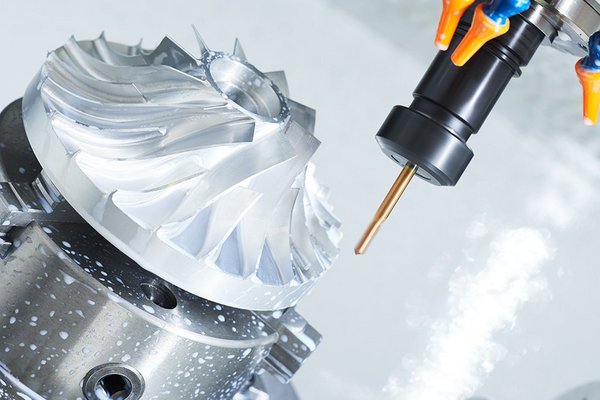
We deliver the metal components we manufacture for you either as raw parts or machined, finished, or assembled into subassemblies.
Processing / Assemblies
Extensive processing, surface treatment of metal parts ✓ pro-assembly and assembly of modules ✓ Tell us your requirements now!
Talk to us about your needs
Richter Formteile has many years of experience and in-depth expertise in the manufacture of precision metal parts using investment casting, MIM, sintering, or die-forging processes. Our customers value us as a reliable partner who provides guidance and support from the initial project inquiry through to delivery.
Additional technical terms in the glossary:
- Processing / Assemblies
- Brown part (MIM process)
- Steam autoclave (Precision Casting Process)
- DIN ISO
- Electropolishing
- Anodizing / Anodizing process
- Debinding (MIM progress)
- Feedstock (MIM process)
- Ceramic slurry (Precision Casting Process)
- Drop Forging
- Green body (MIM process)
- ISO 14001:2015
- ISO 9001:2015
- Notch Impact Strength
- CED Coating
- Alloys in Metallurgy
- Magnetic Particle Inspection / Fluxing
- Loss of material
- Metallic Materials
- Passivization
- Prototype
- Powder Coating
- Reproducibility
- Blank (workpiece)
- Beams
- Galvanizing: The Galvanizing Process
- Pre-financing
- Wax Tree (Investment Casting Process)
- Wax model (investment casting process)
- Wax injection mold (investment casting process)
- Tensile strength
- Tinder layer